
Connectivity is easy to take for granted, until it is unreliable. Until it fails. Until a simple task takes longer than it should, or cannot be completed at all.
For many First Nations in British Columbia, unreliable connectivity is not an occasional inconvenience. It is a daily constraint. It shapes how people access services, how communities respond in emergencies, how students learn, how language and culture are shared, and how economic opportunities are pursued. When connectivity is fragile, the impacts ripple far beyond the screen.
In a world where digital infrastructure underpins almost every aspect of life, access alone is no longer the full story. Who controls that infrastructure matters. Who decides how it is built, maintained, and governed matters even more.
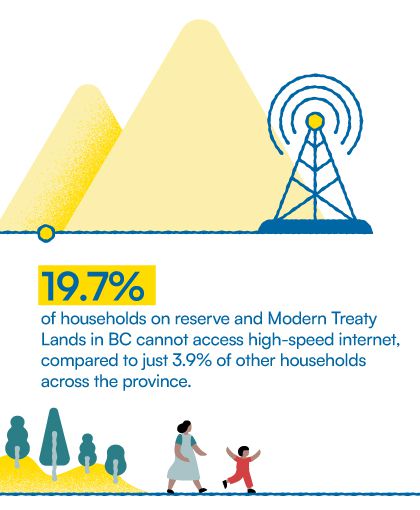
As of March 2025, 19.7% of households on First Nation reserves and Modern Treaty Nation lands in British Columbia still do not meet the minimum recommended internet speeds. This gap reflects more than geography or technology. It reflects systems where decisions about connectivity have too often been made without First Nations at the centre.
Strengthening First Nations Connectivity Through Spectrum Rights is a new report from the First Nations Technology Council. The report explores a critical yet often overlooked aspect of the connectivity puzzle: radiofrequency spectrum. Spectrum refers to the invisible range of electromagnetic frequencies that deliver wireless connectivity to your cell phone, laptops and other technology. It is finite, highly valuable, and deeply connected to who controls and benefits from digital infrastructure.
For First Nations, access to spectrum is about more than technology. It is about sovereignty, equity, and self-determination. When Nations can access and manage spectrum, they gain new opportunities to design connectivity solutions that reflect their own priorities and community needs.
Through interviews, case studies, and policy analysis, this report is part of the Indigenous Digital Enablement Series. It continues the Technology Council's commitment to supporting First Nations in shaping their own digital futures.
Located on the traditional and unceded territories of the Sḵwx̱wú7mesh (Squamish), xʷməθkʷəy̓əm (Musqueam), and səlilwətaɬ (Tsleil-Waututh) Nations.
©2026 First Nations Technology Council | Art by Jamin Zuroski | Website Design by Saltmedia